Conway Aviation
A meeting place for aviation enthusiasts.
Landing Permission
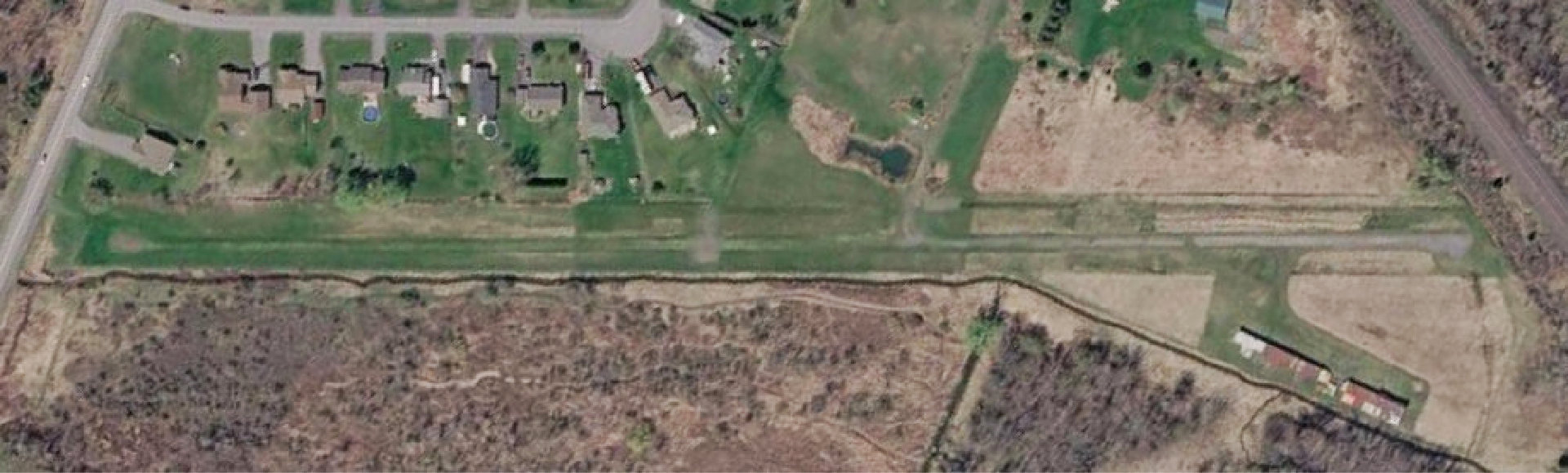
To all licensed aircraft owning pilots: You are all welcome, upon reading, and comply, with the following. Please give notification of your intention to land, via email to: brian.h.conway@cogeco.ca or, voice mail / text to 613 362-8866. It is strongly recommended that all pilots, even to the veteran pilots, perform a precautionary landing. On a daily basis the wild life can be seen on or near the runway and, hangers. The 1950 feet long by 100 feet wide runway has a displaced thresholds at both ends. On the east end, a 50 foot obstacle type approach is required to clear high voltage transmission lines, followed by raised railway tracks. On the west end is a tree line and power line and, a raised road are your obstacles. The runway surface on the east end is Asphalt paved for measuring approximately 400 feet by 15 feet wide. The remaining runway surface is ground up asphalt, graded and, packed, measuring 1550 feet by 20 feet wide. The shoulders are grass covered, soft agricultural ground. In the spring and, autumn the these shoulders can not support aircraft from sinking in mud. Both ends of the runway have hard surfaces for turning around. It is recommended you, turn your aircraft around only, at the runway ends, the airport access road or, the taxi way access from the hangers. Their is a 300 foot radio tower one half mile north of the runway. The airport opens in spring after, all snow or, ice have melted. The airport closes for the winter, after the first snow covers it. The south drain (creek) of the Raisin River runs along three quarters of the southwest end of the airport. In some years, Spring frost thaw, and melting snow creates a quick runoff and, flooding occurs. This flooding occurs approximately around the first two weeks of April, limited to the east end of the airport. It can flood, up to a foot deep. Beavers dams can often block this south drain (creek) potentially causing flooding of the airport. This beaver dam flooding also occurs usually in the Spring. The Township of South Stormont and, the Raisin River Conservation Authority, in co-ordination with a hired wild life contractor, remove the beavers and their constructed dams. Make note on your low flyby the elevation of the south drain (creek). If the south drain (creek) level appears to be at an elevation close to the east end runway elevation then, monitoring this water elevation after landing is a good practice. Flooding only, restricts access to landing and, takeoff dictated by your aircraft’s ground roll requirements. The contractor usually removes the beavers and, their dam before flooding of the airport occurs. Finally, entry of any hanger or contact with any plane that you have no permission is considered trespass. This is enforced with cameras.